Tag: portfolio strategy

·

I’m back at looking at the stock markets and individual stocks. I cannot escape finding companies that have P/E ratios in the 30s, which are relatively slow-growth and arguably have limited prospects. In many cases, these stocks are promoted by billionaire investors who are attempting to inflate their stock prices. This used to be illegal, but now it’s an everyday occurrence.

Valero (VLO): Michael Burry, of “Big Short” fame, revealed this week that he’s owned Valero since 2020. He argues that Gulf Coast refineries are “purpose-built for Venezuelan heavy crude” and would eventually “produce better margins across jet fuel, asphalt, and diesel.”

Valero operates 15 refineries that can process 3.2 million barrels per day of the heavy, sour crude Venezuela produces.”

I guess his ownership of Valero was kept quiet until now. I don’t know about you, but this stinks.

·

Yesterday was another day of fresh highs on the Dow. I continue to be fearful about valuations, but I seem to be howling at the moon. My review of individual stocks continues to reveal inflated valuations that seem to bear no relationship to reality. And now, everywhere I look, recommendations on AI-related stocks seem to be more sanguine than in the past. The problem that I have is that I am not in a position to take open-ended risks, as I live on a fixed income with monies going out and only dividends and interest coming in.

The trick would be to find a surrogate stock for AI or semiconductors. One such stock is 5NPlus. 5N Plus (VNP) produces ultra-pure specialty semiconductors and performance materials, using proprietary techniques to refine metals like bismuth, tellurium, and indium, serving critical industries such as solar energy (like Cadmium Telluride for First Solar), medical imaging (X-ray detectors), security, and pharmaceuticals. The company transforms mining waste into high-purity elements, enabling advanced technology and sustainable solutions in various high-tech sectors.

The stock trades at a reasonable valuation (relatively speaking, of course), with good growth potential and a business model that is not entirely reliant on AI. It’s had a good run, but nothing crazy.

The question that always remains in my mind is whether I’m overthinking things. No one can control the outcomes of their investment decisions. I can only hope to do the best that I can and manage expectations that I can execute things perfectly.

Relying on financial statements and all of the quantitative analysis seems to have less impact on investment success than simply picking solidly managed companies that you invest in for the long term.

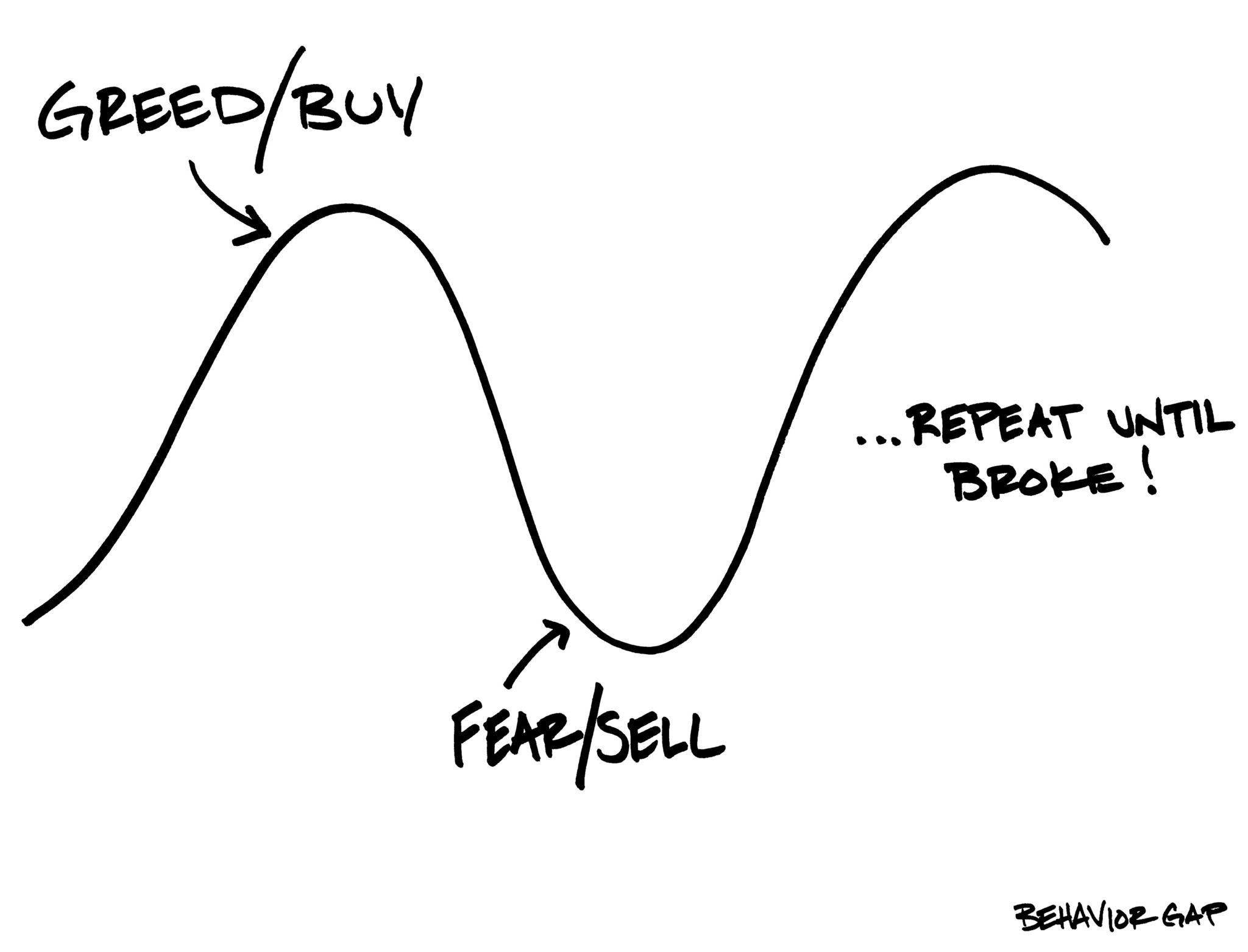
I continued after many years of being a stock market investor, selling when people panic and buying into euphoria. Now in my seventies, I still make the same mistake. I just can’t seem to learn.

·

It’s already January 5th. We are now already into the New Year, but we only have one trading day behind us. I continue to search for suitable investment candidates that meet my stringent but undocumented investment requirements. Over the years of investing, I have failed to establish a clear and concise investment plan. This resulted in my investment decisions being somewhat random.

Eliminating greed and second-guessing from investment decisions requires a structured, disciplined approach that focuses on a long-term plan rather than short-term emotional reactions. By understanding the inherent psychological biases, you can create systems to mitigate their impact.

One issue that pops up all the time is my ability to manage my emotions. Much has been written on the topic, but little has found its way to print.

Strategies to Manage Emotions
• Develop a Written Investment Plan: Before investing, outline your specific financial goals, risk tolerance, and time horizon. This serves as an anchor during volatile periods. When emotions run high, refer back to this objective document to ensure your actions remain aligned with your long-term strategy.
• Focus on the Long Term: Acknowledge that short-term market fluctuations are inevitable. A long-term perspective helps you avoid impulsive reactions to daily news cycles, which are often designed to evoke fear or greed.
• Diversify Your Portfolio: Spread your investments across various asset classes and sectors to manage risk. Diversification can cushion the impact of market downturns and reduce the intensity of fear or the desire to chase a single “hot” stock out of greed.
• Use a Rules-Based System (e.g., Rebalancing): Regularly review and rebalance your portfolio to maintain your target asset allocation. This provides a structured, automated way to make adjustments without emotional input, such as selling assets that have performed very well (curbing greed) and buying those that are underperforming (countering fear).
• Implement Stop-Loss Orders/Position Limits: For those who struggle with selling losers, using pre-defined stop-loss points can help convert temporary losses into smaller, permanent losses, protecting capital and removing the agonizing decision-making process in the moment.
• Practice “Average In, Average Out”: Instead of trying to perfectly time the market, invest a fixed portion of your intended position at set intervals (dollar-cost averaging). This removes the pressure of “second-guessing” the exact right moment to buy or sell.
• Limit Exposure to Market Noise: Turn off financial news and avoid social media groups that promote sensationalized or biased content. Constant exposure to market commentary can heighten emotions and lead to irrational decision-making.
• Maintain an Investment Journal: Document your trades and, importantly, your feelings at the time of each trade. Reviewing this journal later can expose emotional patterns that need adjustment, building self-awareness.
• Seek Professional Advice: An experienced, objective financial advisor can provide valuable guidance, help you stay on track with your plan, and offer an unemotional perspective during times of market volatility.

These are rules that are fairly easy to set out, and not so easy to implement. One part of this that I would find particularly useful is in the Investment Journal. This would document trades. I have no idea which are my losers and winners, as my online platform provides little in the way of detail (historical) on trades. Yes, use paper, not a spreadsheet. Spreadsheets are, but paper is better.

·

On December 31st, markets exhibited some anxiety regarding AI stocks. Everywhere you go, you hear AI. It;s really getting very tiresome. Almost to the point that you have to believe that we are in a bubble. Most of the market gurus say we are not. Reason to be concerned. You can look at all the usual market indicators, but it’s not a substitute for intuition. Ultimately, one needs to go with one’s gut feeling and stand tall in the face of the herd. But it’s not easy by any means.

·

On December 30th, markets continue to stumble around looking for some leadership. I feel that there is an undercurrent of uncertainty developing in the AI space. I continued to be shocked by the elevation of valuations for almost every stock under the sun. I don’t understand what is underpinning the market, but all the stock market gurus seem to be convinced that this is here to stay.

Given the weighting of the Mag 7 in the S&P 500, I still feel that there is room for a colossal breakdown if results fail to meet expectations. The hope that AI will generate enormous profits continues to support markets.

An AI answers to my question:
“The stock market, particularly the U.S. market, is currently experiencing high levels and record highs, largely supported by an ‘AI spending boom’ and investor optimism, often referred to as ‘AI dreams’ or ‘AI exuberance”.
Key Observations
Market Concentration: A small number of AI-related mega-cap technology stocks, such as Nvidia, Microsoft, Alphabet, Meta, and Amazon (often called the “Magnificent Seven”), are driving a significant portion of the S&P 500 and Nasdaq’s gains. In October 2025, the top 30 AI-related stocks made up 44% of the S&P 500 index.
Trillions in Value: Since late 2022, AI optimism has added an estimated $19 trillion in market capitalization to related companies, indicating that investors have already priced in substantial future growth expectations.
Strong Fundamentals vs. Hype: While some AI companies like Nvidia are highly profitable, a lot of the market value is based on the promise of future productivity gains and margin expansion, which has led to concerns about a potential bubble.
Bubble Concerns: The current market environment is often compared to the dot-com bubble of the late 1990s. While some metrics suggest valuations aren’t at the same extreme levels as the dot-com peak, several experts and firms like Goldman Sachs have raised concerns about overinvestment, high valuations, and the potential for a market correction or increased volatility. Jeff Bezos has called the current environment “kind of an industrial bubble”.
Future Projections: Analysts at firms like Evercore ISI have suggested various scenarios, including the possibility of the S&P 500 soaring to even higher levels (e.g., 8,200 or 9,000) in a “bubble scenario” driven by continued AI excitement and favourable economic factors.
In summary, current stock market levels are heavily influenced by the powerful narrative and significant capital flowing into the AI sector. The market is pricing in enormous future growth and productivity gains, leading to record highs, but also sparking ongoing debate about whether these levels are supported by fundamentals or are an “AI dream” that could eventually burst. “

Bubbles and balloons usually burst. Defying gravity is not easy, but here we are.

brown nuts
Photo by Miguel Á. Padriñán on Pexels.com
·

I have been looking at an area called quantum computing. Something that I know nothing about, which has caught my eye. The company is called IonQ. IonQ Inc. is an American quantum computing hardware and software company headquartered in College Park, Maryland. The company develops general-purpose trapped ion quantum computers and accompanying software to generate, optimize, and execute quantum circuits.

The company sports a market cap of $16 billion. Amazing for an unproven technology and an unproven company. You can read a lot about it if you search with your favourite search engine. It will definitely show up. Unfortunately, nowadays, everywhere you go, they try to get you to sign up or pay to see their musings on this, that or the other stock. So much for the old theory of the internet being the “common man’s”. Sucks.

Basically, the “tech” writers tell you that it’s unproven technology and that it has a long way to go before it may become financially viable, so buying the stock is purely speculative. But many of them have had enormous gains over the past twelve months. The financial literature is riddled with them.

There seems to be a lot of speculative capital floating around. And it’s easy to get sucked into the game. Wherever you look, you’ll feel like you missed the boat unless you get into it. I must admit that I’m tempted to take a flyer.

But this must be with money I’m prepared to lose, as it’s likely I will lose. Not sure how to resolve the pull of tech, it’s a bright shiny toy. But a fool and their money are still easily parted. Not much changes, and we will see how this works out as time goes by.


·

I have been a buyer of UBER Technologies given its low p/e ratio and what I consider to be a pretty rosy outlook. The company continues to face never-ending challenges from its competitors to tie it up in legal battles. It’s difficult to come to any conclusions on how this will all end up.

I was in Tokyo in December 2024 and saw UBER vehicles everywhere as they are clearly visible with the UBER logo and paint job. It was quite an impressive show of how the company has permeated foreign markets. But it has a lot of competition everywhere.

“Uber is in Japan, but it’s not the dominant, UberX-style service; instead, it primarily partners with local, licensed taxi fleets, acting as a familiar taxi-hailing app, especially useful in major cities like Tokyo, Osaka, and Kyoto for airport transfers or areas with few cabs, though it’s often pricier and less ubiquitous than in other countries due to strict regulations and a strong existing taxi culture, with local apps like Taxi GO also popular. ”

The business model has evolved to blend into the local “culture”. I hope that is the key to success in other markets.

Having said that, UBER is a large corporation, and likely not that easy to manage. But with robo taxis on the horizon, UBER, in my opinion, is pretty well placed given its size and scale of operations. This is not investment advice, just my personal view of things.

·

Building a portfolio is not as easy as it once was. You have a lot of IT-related stocks that have provided incredible returns if you had held on to them. Price/earnings ratios have blown out to nose-bleed territory.

What I have noticed is that a lot of the stock price increases are attributable to higher P/E ratios. So what is getting baked into the price of stocks is accelerating earnings coming from AI-related activities. I have no way of knowing how much of the market’s performance is attributable to this, but it’s not insignificant.

I you look at, for example, IBM, you see P/E expansion lifting the share price. In a few years, the P/E ratio has moved from around 10 to over 30. Expectations are very high, and it would seem that disappointments will result in some severe readjustments in the price.

Of course, it’s different now. That’s always the case when things get way out of line. But it’s been going for years

HSBC has moved from a P/E ratio of 8 to well over 20. You see this again and again and again. What’s changed at HSBC? Not much that I can see, other than lazy capital looking for places to invest and driving up P/E ratios. It’s truly frightening.

In looking at my portfolio, most of the stocks have very elevated P/E ratios, which I believe will ultimately come back to more normalized levels, and that would require a pretty significant price adjustment. I just don’t see the growth there.