Tag: investments

·

Stock markets continue to go sideways. I am waiting to complete a makeover of my portfolio to allow for less active management and reduce volatility. That usually means more fixed income. One point to be aware of is that the effect of having a portfolio that is more “balanced” is to reduce the potential returns.

It’s a simple calculation. Just look at the weighted-average returns using some assumed rates of return on equities and fixed income, whatever they might be. The result is that even a 50/50 balanced portfolio will make it very difficult to grow your portfolio. But it’s the same old story. Risk and return are inversely proportional.

In the end, it’s necessary to look at your risk tolerance as well as your cash flow needs. It then gets back to budgeting to make the numbers work as best you can. Budgeting is not complicated; it doesn’t need fancy software or an elegant bookkeeping software package. But it does need a commitment to keeping this routine of tracking stuff consistently. In the absence of being consistent, it’s just a waste of time.

“Microsoft Excel Built-in Templates: Open Excel, go to ‘New,’ and search for ‘Budget.” The “Simple Annual Budget” or “Personal Monthly Budget” are excellent for beginners, providing summary charts and expense tracking.

Check out these free templates to get started. It’s not that difficult.

magnifying glass on blue paper
Photo by RDNE Stock project on Pexels.com
·

Markets continue to climb up as I monitor my own behaviour. I bought shares in a small solar technology company that is based in Japan. I happened to read about it in one of the online tip sheets that are so prevalent now. I reviewed the company’s financial statements, which are a complete mess. There’s a whole lot of “creative financing” which is almost impossible for the normal reader of financial statements to comprehend.

I searched around and found a YouTube video the company had posted, and saw the most amazing factory manufacturing solar panels with no people working in it. I decided to purchase the stock even though it had a market cap of less than half a billion dollars. A microcap nowadays.

In the following months, the company announced expansion in the United States to avoid tariffs. The stock skyrocketed.

What’s the point of all this? Now I’m sitting on a large percentage profit. The stock is very volatile, moving 6 or 7 percent a day, some back-to-back days. I cannot decide whether to sell or hold. The gain is enough to be noticeable if the company gets wiped out. A lack of a decision-making tool is the problem yet again. How to decide? If I had set a target profit, I likely would have sold out a long time ago.

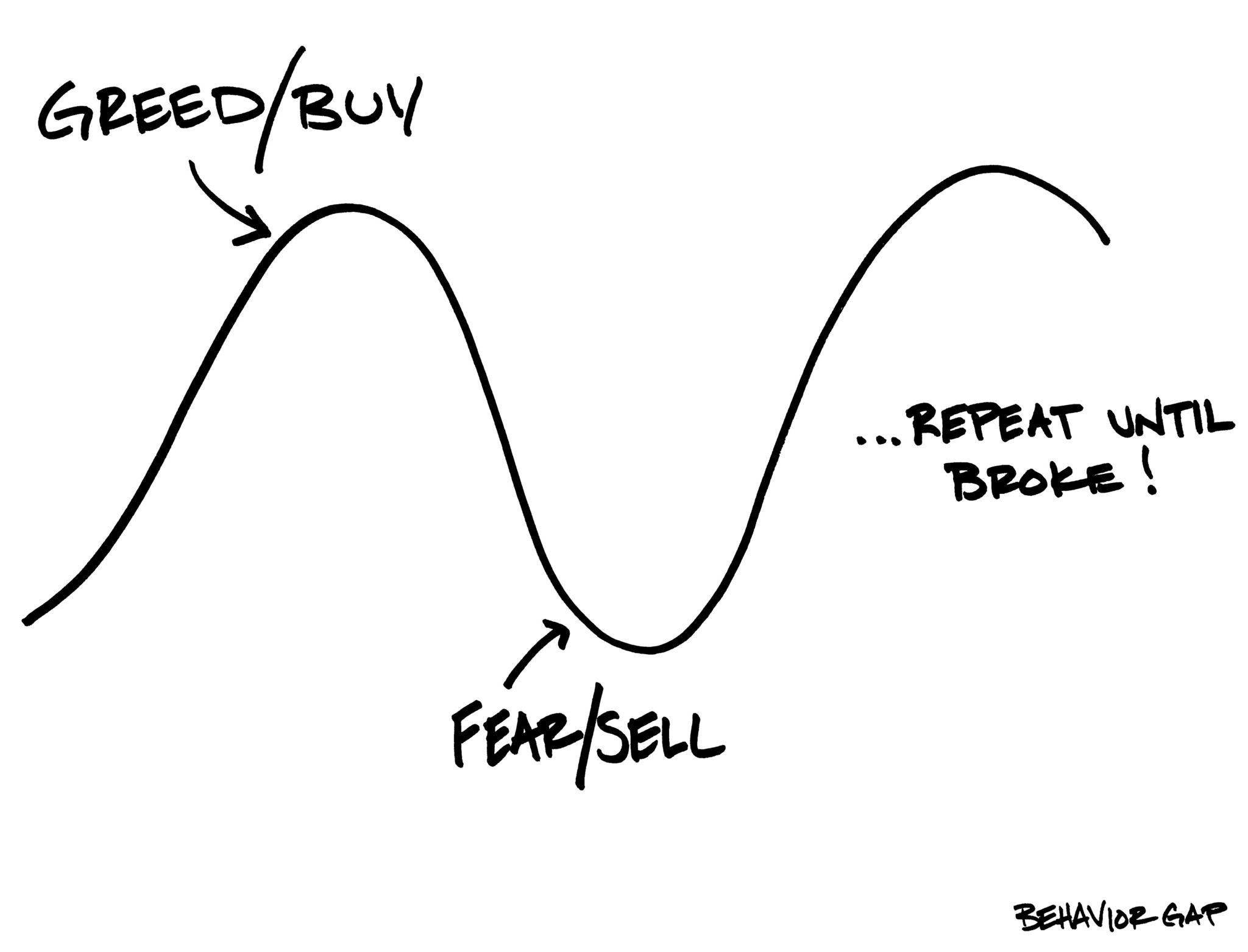
Success in investing is not just about picking the right stock. It’s about making decisions and moving on. When is it enough? I am locked into a vicious circle of both greed and fear. Horrible. How to get out?

pexels-photo-3483098.jpeg
Photo by John Guccione http://www.advergroup.com on Pexels.com
·

I’ve been away for a week, preoccupied by other things. The last week has seen a lot of activity on the geopolitical front, with the tensions in the Middle East having eased for now. The Dow has taken a run up almost to the 50,000 level again. Amazing how volatile it actually is and how fast the stock prices can move.

The last few months have been another lesson in how panic will destroy value. It seemed pretty bleak about a month ago as the war started, and there were fears about the ultimate strength of the Iranian regime. I’m not a politician, but it’s not clear to me that this will be another break until there is a change in the presidency and things slide the other way. What do I know?

What does all this mean for my investment strategy? As a septegenarian it’s clear. Look to remove the volatility in my portfolio and nail down some cash flows. This translates into more fixed income and more conservative stocks. A slow process, but there really is no other choice.

I did some homework and determined that an optimal annual return for me is 4%. Some investment advisors proposed that in order to achieve that goal, I should go 75% fixed income and 25% equities. I assumed an 10% annual return on my equities and 4% on the fixed income. That would give me a weighted average return of around 5.5%. They were asking for a management fee of 1%. The net to me is 4.5%. Not much margin for error, particularly in years that see a downmarket. If I simply do 100% fixed income with no fee, I have a locked-in return of 4%. I’m not sure where the investment managers are adding any value. Beats me.

Remember that the equity portion still has risk. And I’m already assuming a 10% rate of return on equities every year. This needs more work. The truth to be told is that I can live with a pretty meagre rate of return and still maintain my lifestyle. But do I need to pay so much for a little incremental return with risk?

·

I have been using AI frequently in trying to determine an investment strategy. Quite often, I get results that are contradictory and sometimes completely wrong. If you even start to dig a little, you find that much of the information that is generated is at best unreliable. Look carefully as to where the information is coming from. You’ll see the sources footnoted in much of the AI narrative.

What I have noticed is that even for financial-related matters, AI is drawing the information from Reddit and Wikipedia. Now I don’t know about you, but these are highly unreliable sources of financial information drawn from people who are just writing with little or no knowledge of accounting, tax or financial management. In my opinion, the whole thing is getting seriously dumbed down.

“Costco (COST) stock is generally considered a high-quality, long-term hold, but its premium valuation (P/E over 50) makes it expensive to buy at current, near-record high levels. While analysts have a moderate buy consensus with a $1,185 target, new investors may want to wait for a price pullback.

Key Considerations for Costco Stock:


Strong Performance: Costco has high membership renewal rates and a durable, consumer-defensive model.


High Valuation: Trading at a P/E ratio over 50, it is expensive relative to the S&P 500 and peers such as Walmart.

Growth Outlook: While dependable, growth is moderate rather than explosive, leading some to recommend holding rather than aggressive buying.

Analyst Outlook: Analysts generally consider it a “Moderate Buy”, with a recent BofA target of $1,185.Existing shareholders often hold for the long term, while new investors are advised to seek better entry points.

Further Exploration: Analyze the 5-year return comparison to see how Costco has historically outperformed the S&P 500. Review the latest Q1 earnings analysis to understand current operational performance and key risks. Examine a bearish valuation argument focusing on the stock’s high P/E ratio compared to its growth.”

This information is being drawn not from analysis by major US investment firms or analysts, but from the Motley Fool. This is the primary source of the information. So I am being fed the Motley Fool by using this hyped up search engine to transcribe the information.

I don’t know how to deal with this. What’s happened is that I have gone from rigorous analysis to relying on a search engine to scan through unreliable, unprofessional investment newsletter platforms. A truly scary thought. But markets are now dominated by emotion and trading tactics over the medium term rather than real fundamentals.

·

Stock markets were stable to up today, trying to digest the news from the Middle East. It’s my opinion that we are facing many years of instability in the Middle East and elsewhere. The United States has failed to play to win again, even with Trump at the helm.

I don’t care about the politics, but the current reality on the ground shakes my fundamental belief in the US economy. What we see in the news is a lot of “micro” reporting, very little in the way of looking at the long game and how this is going to play out over the years to come.

I cannot imagine what the Taiwanese are thinking right now, how all this will play out for them vis-à-vis the Chinese. I don’t think it looks good. If one were to incorporate this kind of thinking into their investments, how would one adjust one’s portfolio to this “new reality”?

To find a defensive strategy here for someone in my position (74 years old and looking at not so many years to go), there aren’t a lot of good options. Stocks, perhaps. And then I add in my uncertainty around the US Estate Tax if I’m outside of Canada, and my investment options become even more restricted. There is always the option of simply putting my cash into short-term vehicles like treasury bills and treasury bonds. The Investment professionals seem to feel that it is folly.

Not that they offer any viable alternatives. What I do believe is that investors probably don’t rigorously try to determine what their financial needs will be in the future. If you save for retirement, should you not get to a point where you have a target rate of return? Do I need 10% compunded every year to live? This requires some thorough analysis and an honest look at how you can live given what you have got. It’s a simple spreadsheet that most can do with little effort. Analyzing what comes in versus what goes out. Building in a rate of return and your taxes, and voila! Be honest with yourself while looking at what you have versus what you need. Make your lifestyle fit your cash flow.

As I get older, I find I need less, want less and can easily spend less. I don’t have the energy or desire to travel. I don’t spend much as I don’t go out much. I’m too exhausted.

Get real. Have a reasonable plan and move forward.

close up shot of a yellow alarm clock on a purple surface
Photo by Photo By: Kaboompics.com on Pexels.com
·

Stock markets look to open very strongly today after the announcement of a ceasefire between the United States, Israel and Iran. It looks like it will be quite a positive day for the markets. In my opinion, nothing has been resolved with Iran, and it’s difficult to know where markets will go.

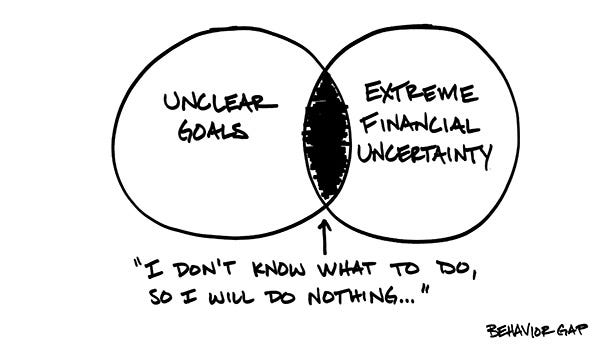
In terms of long-term strategy, my question is: what has all this accomplished, and is it just a break in the action? I don’t know. But I have several objectives to achieve that have been imposed on me as a result of my attempt to emigrate from Canada. None of which I have dealt with because of the stickiness of taking long-term decisions with what I believe to be incomplete information.

I continue to resist creating an investment policy statement to guide me through this. And I am suffering severe indecisiveness.

·

The stock markets continue to reflect uncertainty over the Middle East. What I have noticed is the considerable decline in the share prices of many of the Magnificent 7. The market seems to have rotated out of the tech sector in a rather significant way. Share prices are down 20-25% from the most recent highs.

What I have noticed in my own behaviour is a lack of conviction in the strategy that I have tried to implement. My portfolio continues to display considerable volatility. I get excited and hang on when the market moves up, and become concerned when it moves down. I want to reduce my exposure to stocks, but do nothing to implement the strategy. It’s the same old story, a deer locked in the headlights, and I can’t move.

Fortunately, a couple of months ago, I lightened up on a lot of the stocks that have taken quite a nosedive. But I still have several stocks that are not consistent with my developing desire to mitigate the risk in my portfolio.

The takeaway from all this is simple. I have failed over the years to develop an investment strategy, so I am like a cork tossed in the waves. Because of my personal issues, I fail to do what I need to do. It’s always the same story: you cannot succeed if you are not prepared to act. Anxiety and a lack of self-confidence lead to dysfunctional decision-making.

In addition, not adjusting your investment strategy to your stage of life will cause anxiety, distress and a failure to make critical decisions.

·

Yesterday’s stock market bounce may very well be a “dead cat” bounce. In other words, just a pause in the action. The market today looks a little bit soft, but it was nice to see some return to a level of optimism. Perhaps this was misplaced, but that’s the way the market operates.

The point I would like to raise is how this affected my behaviour. What I mean is this. I went from pessimism (woe is me, why didn’t I buy the index and some safer ETFs) to why can’t I buy more stocks or gold. It’s the same old story, trying to time the market.

This kind of behaviour is a type of mental “whiplash”. It shows a lack of conviction in my principles, which are poorly defined. Again, this leads back to a well-developed Investment Policy Statement. Always back to first principles. And getting away from that in whatever I do is dangerous.

The Investment Policy Statement is the basic document that will allow me to keep my focus and avoid bouncing all over the place. Today, I will spend the day developing, refining, and concluding it.

·

Monday morning, waiting for markets to open. Today I decided that I won’t be looking at the goings on. It’s not productive and not useful, as I won’t sell into the pending chaotic days ahead. That doesn’t mean I won’t fret. However, I have noticed that although the markets are down from the highs, individual stocks have fared much worse. It just reinforces my next steps to reduce the volatility of my portfolio. I look at some of my old posts, and I didn’t take my own advice. Sorry state of affairs.

·

The Canadian stock market has had a pretty good two years after being “dead money.” It was a very poor investment for a couple of decades. But, in my opinion, this has been driven by the financial sector, a paper shuffle. And then there is the real estate sector. Another paper shuffle. But you need to dig a little deeper.

As of early 2026, the financial sector, dominated by Canada’s “Big Six” banks, accounts for approximately 33%-33.2% of the S&P/TSX Composite Index’s market capitalization.

Bank Domination: The “Big Five” (RBC, TD, BMO, Scotiabank, CIBC), along with National Bank, command 86.3% of the Canadian banking sector’s market share, making them the primary drivers of this percentage.

Key Data Points for 2026:

Top Constituents: Royal Bank of Canada (RBC) and Toronto-Dominion Bank (TD) consistently rank as the top two largest companies by market cap on the entire TSX.

While the financial sector is the largest, it is closely followed by energy and materials, with banks serving as the primary anchor for the Canadian market’s high concentration in financials

Services, including the massive real estate sector, constitute over 70% of Canada’s GDP. Real estate, rental, and leasing specifically represents a major portion, often cited at around 13% to 14% of the national GDP, acting as the largest single industrial contributor to the Canadian economy.

Key Details Regarding the Services and Real Estate Sector:

Total Services Sector: The broader services sector, which includes professional services, healthcare, finance, and real estate, accounts for roughly 70% of GDP.

Real Estate Focus: The “real estate, rental, and leasing” industry is the largest contributor to Canada’s GDP, accounting for 13.2%.

Provincial Dependence: Some provinces are highly reliant on real estate, with British Columbia experiencing up to 1 in 5 GDP dollars (19.6%) generated by the sector.

Broad Definition: The real estate sector’s high percentage includes the “imputed” rent of owner-occupied homes, not just commissions and leasing fees.

Underground Activity: Real estate and related financial services are also key players in the underground economy, representing 15.3% of that activity.

This is indicative of the fact that Canada has no real economy. If you add in a few tech companies and a couple of pipelines, there’s not much out there for a long-term investor. And then there is the real estate sector, which adds no real wealth; it’s just playing with yourself to create fake value.

This would also explain the growing income inequality and the loss of productivity (failure to invest in anything except paper assets). Over the last decade (roughly 2015–2025), Canada has experienced a significant, structural slowdown in business investment in capital assets, leading to a widening productivity gap with the U.S. While non-residential capital stock grew by only 10.9% in real terms over the decade, investment per worker has stagnated or declined, particularly in machinery, equipment, and non-residential structures. 

In my opinion, this is the explanation for the rather anemic performance of the Canadian stock market in decades gone by. It likely does not bode well for the future. What will happen to Canada? I don’t know, but I wish I had acted on this a long-time ago. Poor retirement planning on my part, and not enough due diligence.

Will an investment advisor help here? I’m not sure. There are no easy answers. But can you really rely on someone who has a superficial knowledge of these matters to guide you long-term? To have an understanding of what’s going on in the long-term? I think not. You need to do a lot of due diligence to find someone to be your investment advisor.


·

I am currently residing in Canada. I have lived here, except for a few short breaks, for over 65 years. I must say that as the years go by, I become increasingly disillusioned with Canada. I’m not sure what the attraction is for immigrants (other than they can’t get into the United States). Nosebleed prices for everything, incredibly high taxes with a government that is never satisfied with its “take”. It’s never enough.

During the last few years, there have been a lot of winners in the stock market, AI, and metals. The manufacturing sector is nonexistent. Governments have stifled the growth of the natural resource sector. Canadians are pretty much asleep, living off I don’t know what.

One of the main drivers of the Canadian economy is the real estate sector. Now that’s in crisis, and there is not much else out there. Maybe some tech will save the country, but ride a subway in Toronto at 2 PM in the afternoon and you will see the Canadian work ethic.

Today, Canadian stock markets took a huge dive. You would think that a resource-rich country like Canada would benefit from the turmoil in the Middle East. No. A more massive drop than New York.

Canadian stock market returns look good over the last five years. It’s because of the last couple of years. For decades, Canada was dead money. I believe that inevitably it will revert to that.

There are some good utility stocks, pipelines and maybe some tech. The rest is a real stinker. Look before you leap, and if you’re outside Canada, remember the currency risk that you are taking on board. Canada has not been a great place to put your money.

·

In managing your personal finances and planning for retirement, another aspect that needs to be addressed is bookkeeping. Yes. Mundane, ordinary bookkeeping. It’s hard to keep track of what’s going on with your money unless you do some basic bookkeeping. You don’t have to be a CPA or have a college degree. There are some basics that you can do and stay ahead of the game.

First of all, you have your bank statement to keep track of your spending. You can buy a “canned” program, but you can also use Excel. Many banks, I believe, allow you to download your information that appears on your bank statement as an Excel file. There, the work can begin, but it’s pretty simple. Look at your cash inflows and cash outflows during the month. Then you’ll have your net cash position. The cash you take out, if you do, can simply be recorded as a miscellaneous expense.

This will be the first step to see what’s coming in and what’s going out. The difference is a critical number that I will discuss in my next post.

·

Stock markets opened with a whimper today. It appears that markets are still feeling the pressure of the Middle East conflict. Gold prices continue to fall. I suspect there was a lot of profit-taking going on after the pretty fast run-up in the price. It would seem that gold continues to have a place in long-term portfolios, but no one is talking about gold now. Buy when others are selling, sell when others are buying if you are interested in accumulating a position.

Gold shows you how volatile things can get. It dropped $1,000 an ounce in a pretty short period of time. There are no safe havens anymore, just pain or less pain.

Once again, I am displaying a trading mentality. Looking for the short-term profits. But I must always remind myself that I have maybe 10-15 years left to go. I cannot withstand long-term drawdown periods. So, keeping that in mind would seem to indicate that gold does not fit.

Long-term Canadian stocks worry me, so I look to utilities that have stable revenues and growing dividends.

·

Holding individual stocks has its risks and benefits. A while ago, I bought FedEx shares. They were down in the dumps as they were restructuring the company and going through some changes in their relationship with Amazon. The stock took a nosedive after I bought it, and I added to the position. Since that time, the stock has doubled in a matter of months.

In looking to restructure my portfolio, it was one of the stocks I sold. This morning, the stock’s pre-market is up 6%.

There are a couple of points to note here. First, these things happen. At the same time, I sold my position in Microsoft, which subsequently took an epic dump in share price. You win some, you lose some.

More importantly, what I have gotten into is speculating, not investing. Buying individual stocks can get you there pretty easily. For about a 10-year period, I was disciplined enough not to play this game. But as the market continued to climb, I got into it. It can be exhausting. But more importantly, you end up taking your eye off the ball. You lose sight of your overall investment objectives and start trading your book if you are like me.

Benjamin Graham defined investing as an operation based on thorough analysis, promising safety of principal and an adequate return, while all other operations are speculative. Investors focus on intrinsic business value, whereas speculators bet on price movements driven by market sentiment.

Key Principles from The Intelligent Investor:

Definition: Investment relies on analysis; speculation relies on hope and market timing.

Attitude: The investor acts as a business owner; the speculator acts as a player trying to outguess market fluctuations.

Risk: Speculation becomes dangerous when it is treated as investing. Graham advised limiting speculative, or “mad,” money to a small percentage of a portfolio (e.g., 10%).

The Goal: Investing prioritizes protecting capital, while speculation prioritizes quick gains.

Key Takeaways:

Know the difference: Graham argued that both can be “intelligent” only if one understands which role they are playing.

Avoid “Unintelligent” Speculation: This includes speculating when you think you are investing, treating it as a serious business when lacking skills, and risking more than you can afford.

Market Sentiment: The intelligent investor is a realist who sells to optimists and buys from pessimists.

Good advice in the face of the madness we are seeing now. Every time you click on CNBC or another website, remember this. When you look at your individual stocks and want to trade them, remember this. Be prudent, take profits. Keep your eyes open as to what is going on around you. Develop your investment policy statement and stay focused.

Photo by cottonbro studio on Pexels.com
·

As a general matter, building your wealth requires vigilance. Even when you get the assistance of a financial advisor, you need to keep an eye on what’s going on. Relying totally on someone else to manage your wealth is, one might say, a little risky.

I paid lip service to creating an investment policy statement. It seems unnecessary. It’s not. It provides an overall framework for your future investments. It prompts you to consider where you will allocate your money and how your investment goals will change over time. It’s a mistake not to take it seriously, as I did.

There are many online resources available for crafting an investment policy statement. Do it! Don’t consider it as another unnecessary step. Don’t outsource this as well. Make sure it gets done, and that you are the originator of the document, not just filling in the blanks.

This is a short post. But I cannot overemphasize how important it is to go through the process, even if you are managing your own investments.

hard cash on a briefcase
Photo by Pixabay on Pexels.com

·

The markets closed today without doing any more significant damage to my money. I’m not sure whether the buying has come back, but for now it seems to have settled down, waiting presumably for some news from the Middle East. Canadian oil and gas stocks moved up in what is likely a dead cat bounce. I don’t believe that Trump is in a very strong position to allow long-term damage to the global oil supply with the mid-term elections coming up.

I get the feeling that this war with Iran will be yet another episode of unfinished business. This in turn, will inevitably bring more volatility to the markets in days and maybe years to come.

Canadian stock markets were down today, except for oil and gas. Canada is, in my opinion, a mess. And the outsized gains over the last two years have been the result of an upswing in base and precious metals. This was driven by the crazy AI stuff, which seems to have suddenly disappeared! No one is talking AI!

In closing off for today, there are a couple of points that I need to get into my head. As a 74-year-old man, I need to concern myself with capital preservation. I need to get the volatility out of my portfolio!