Tag: investment strategy

·

It’s already January 5th. We are now already into the New Year, but we only have one trading day behind us. I continue to search for suitable investment candidates that meet my stringent but undocumented investment requirements. Over the years of investing, I have failed to establish a clear and concise investment plan. This resulted in my investment decisions being somewhat random.

Eliminating greed and second-guessing from investment decisions requires a structured, disciplined approach that focuses on a long-term plan rather than short-term emotional reactions. By understanding the inherent psychological biases, you can create systems to mitigate their impact.

One issue that pops up all the time is my ability to manage my emotions. Much has been written on the topic, but little has found its way to print.

Strategies to Manage Emotions
• Develop a Written Investment Plan: Before investing, outline your specific financial goals, risk tolerance, and time horizon. This serves as an anchor during volatile periods. When emotions run high, refer back to this objective document to ensure your actions remain aligned with your long-term strategy.
• Focus on the Long Term: Acknowledge that short-term market fluctuations are inevitable. A long-term perspective helps you avoid impulsive reactions to daily news cycles, which are often designed to evoke fear or greed.
• Diversify Your Portfolio: Spread your investments across various asset classes and sectors to manage risk. Diversification can cushion the impact of market downturns and reduce the intensity of fear or the desire to chase a single “hot” stock out of greed.
• Use a Rules-Based System (e.g., Rebalancing): Regularly review and rebalance your portfolio to maintain your target asset allocation. This provides a structured, automated way to make adjustments without emotional input, such as selling assets that have performed very well (curbing greed) and buying those that are underperforming (countering fear).
• Implement Stop-Loss Orders/Position Limits: For those who struggle with selling losers, using pre-defined stop-loss points can help convert temporary losses into smaller, permanent losses, protecting capital and removing the agonizing decision-making process in the moment.
• Practice “Average In, Average Out”: Instead of trying to perfectly time the market, invest a fixed portion of your intended position at set intervals (dollar-cost averaging). This removes the pressure of “second-guessing” the exact right moment to buy or sell.
• Limit Exposure to Market Noise: Turn off financial news and avoid social media groups that promote sensationalized or biased content. Constant exposure to market commentary can heighten emotions and lead to irrational decision-making.
• Maintain an Investment Journal: Document your trades and, importantly, your feelings at the time of each trade. Reviewing this journal later can expose emotional patterns that need adjustment, building self-awareness.
• Seek Professional Advice: An experienced, objective financial advisor can provide valuable guidance, help you stay on track with your plan, and offer an unemotional perspective during times of market volatility.

These are rules that are fairly easy to set out, and not so easy to implement. One part of this that I would find particularly useful is in the Investment Journal. This would document trades. I have no idea which are my losers and winners, as my online platform provides little in the way of detail (historical) on trades. Yes, use paper, not a spreadsheet. Spreadsheets are, but paper is better.

·

On Monday, January 5th, the stocks that I follow continue to stay strong. I find that buying opportunities, namely what I believe are reasonably priced stocks, are limited. I have yet to articulate a set of decision-making rules to purchase stocks. I’m also having difficulty reducing my performers, which have done so well for the last decade. The is emotion defying logic, and one would think that it is something to squeeze out of the decision-making process. Not so easy.

I have come across an intriguing company that I bumped into before, but I didn’t follow up on. Ferrari (RACE). More on that latter.

·

Yesterday was another day of fresh highs on the Dow. I continue to be fearful about valuations, but I seem to be howling at the moon. My review of individual stocks continues to reveal inflated valuations that seem to bear no relationship to reality. And now, everywhere I look, recommendations on AI-related stocks seem to be more sanguine than in the past. The problem that I have is that I am not in a position to take open-ended risks, as I live on a fixed income with monies going out and only dividends and interest coming in.

The trick would be to find a surrogate stock for AI or semiconductors. One such stock is 5NPlus. 5N Plus (VNP) produces ultra-pure specialty semiconductors and performance materials, using proprietary techniques to refine metals like bismuth, tellurium, and indium, serving critical industries such as solar energy (like Cadmium Telluride for First Solar), medical imaging (X-ray detectors), security, and pharmaceuticals. The company transforms mining waste into high-purity elements, enabling advanced technology and sustainable solutions in various high-tech sectors.

The stock trades at a reasonable valuation (relatively speaking, of course), with good growth potential and a business model that is not entirely reliant on AI. It’s had a good run, but nothing crazy.

The question that always remains in my mind is whether I’m overthinking things. No one can control the outcomes of their investment decisions. I can only hope to do the best that I can and manage expectations that I can execute things perfectly.

Relying on financial statements and all of the quantitative analysis seems to have less impact on investment success than simply picking solidly managed companies that you invest in for the long term.

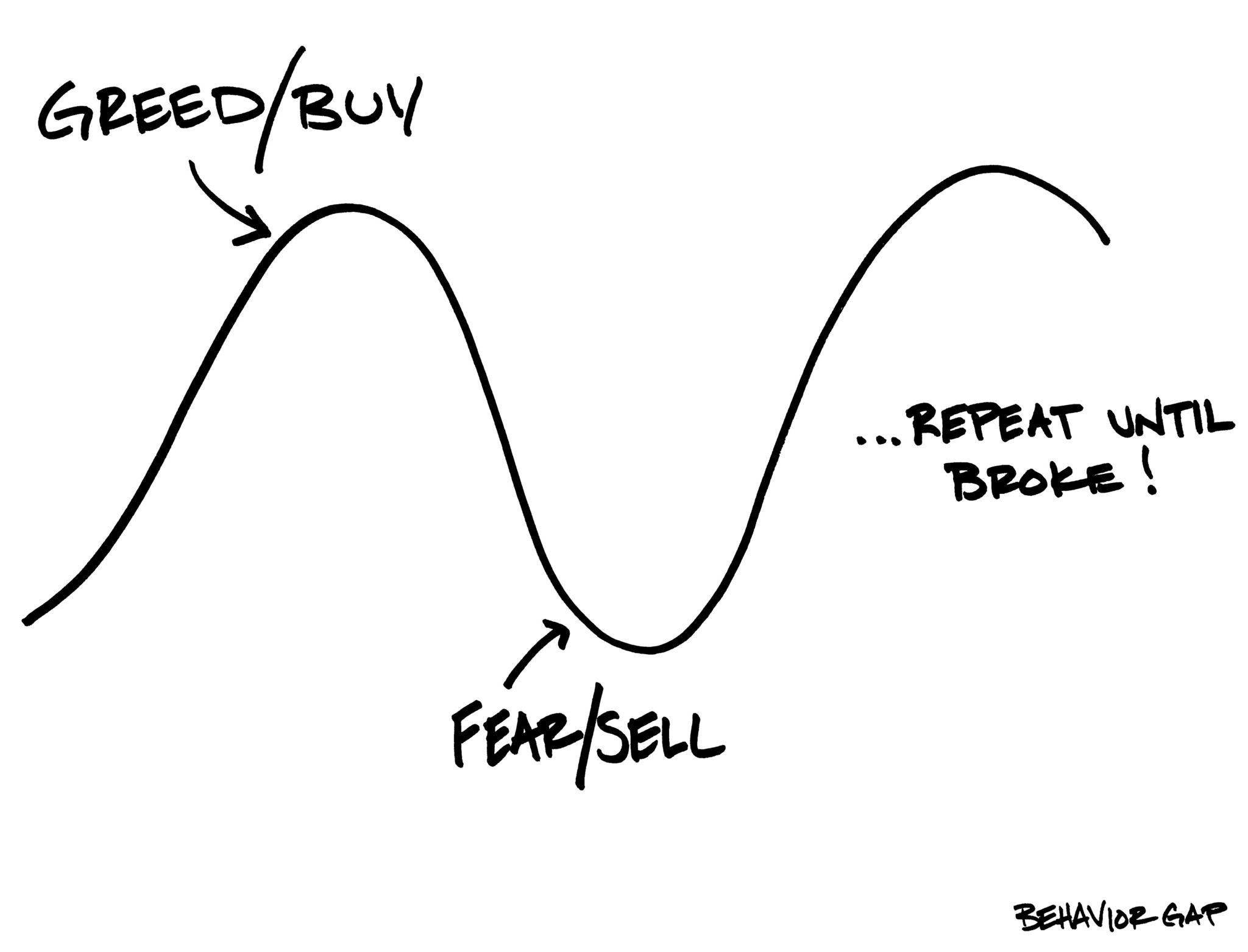
I continued after many years of being a stock market investor, selling when people panic and buying into euphoria. Now in my seventies, I still make the same mistake. I just can’t seem to learn.

·

One aspect of retirement planning that has escaped the eye of investors in Canada is the Registered Retirement Savings Plan, and its siblings, RRIFs, LIFs and others. The whole retirement planning mob in Canada has created a monster when it comes to retirement savings.

The biggest issue surrounding registered plans in Canada is the misconception that has been created, which suggests that saving in a tax-sheltered plan is an efficient and financially sound way to save for retirement. In my opinion, nothing can be further from the truth. And you don’t need a whole bunch of fancy financial models and calculators to prove my point.

The last ten years have been very good to investors who bought quality stocks and hung on to them for more than 10 minutes. Let me give you an example. In 2014, Microsoft’s stock was trading at around $50. Now it is trading pretty close to $500. If I invested $10,000 in MSFT, I would now have around $100,000. A capital gain of $90,000. Had I put it in my RRSP, I would have likely gotten, say, a tax refund of around $3,000. If the shares are now in my RRIF and I take the cash out, I have converted a capital gain of $90,000 into income. It’s not that unusual, given the way stocks have performed over the last 10 years including Google, Tesla, Meta, the list goes on and on.

The false conversation around the time value is not an issue here. So, can someone explain to me on which planet converting a $90,000 capital gain to income makes any sense? The gain dwarfs the tax relief. It’s just a tool to generate fees and assets for financial institutions in Canada.

I will refine this argument and hope to show over time how Canadians have been hoodwinked into flowing their money into the registered plans, destroying their financial freedom and retirement planning.

More to come on this topic.


·

I’m back at looking at the stock markets and individual stocks. I cannot escape finding companies that have P/E ratios in the 30s, which are relatively slow-growth and arguably have limited prospects. In many cases, these stocks are promoted by billionaire investors who are attempting to inflate their stock prices. This used to be illegal, but now it’s an everyday occurrence.

Valero (VLO): Michael Burry, of “Big Short” fame, revealed this week that he’s owned Valero since 2020. He argues that Gulf Coast refineries are “purpose-built for Venezuelan heavy crude” and would eventually “produce better margins across jet fuel, asphalt, and diesel.”

Valero operates 15 refineries that can process 3.2 million barrels per day of the heavy, sour crude Venezuela produces.”

I guess his ownership of Valero was kept quiet until now. I don’t know about you, but this stinks.

·

Another aspect of registered savings plans in Canada (RRSPs, RRIFs and others), is their portability. What I am referring to here is what happens to these plans in the case where you might want to retire in a country other than Canada.

I have been researching the subject, and a couple of things have come up. First, it’s very difficult to get a clear answer on what happens when you emigrate from Canada. It seems that policies differ from bank to bank, perhaps to a great extent or maybe with minor differences.

What is clear is that in some cases, you will lose access to your portfolio online. What that means is that you will need to actually call in to do a foreign exchange transaction or move funds from your registered plans to your bank account.

As I mentioned above, your account may be coded sell only. So that means that your portfolio is frozen in time, and you cannot make any adjustments to your portfolio other than a sale. If you want to replace one stock with another, you cannot do so. You can only liquidate into cash. It makes traditional portfolio management impossible.

I did a search using AI on how one might manage a portfolio in this situation. It came up with this:

ETFs are generally a better choice than individual stocks for a portfolio that can only be liquidated and not replenished with new purchases, primarily due to diversification benefits and lower single-stock risk.

Why ETFs are Generally Better

Instant Diversification: An ETF is a basket of many underlying securities (often dozens or hundreds). This structure immediately diversifies your holdings across different companies and potentially sectors, which significantly reduces the impact of a poor performance from any single company within the fund.
Reduced Single-Stock Risk: Individual stocks carry idiosyncratic risk (risk specific to that single company), such as a product failure, a lawsuit, or poor management that could drastically drop the stock price. In a liquidation-only scenario, you can’t buy more shares to average down your cost basis or rebalance if one stock plummets. An ETF mitigates this risk by spreading it out.

Built-in Risk Management: With no ability to make new purchases or rebalance actively, the inherent diversification of an ETF acts as a protective shield against volatility. Your portfolio is more resilient to market shocks.

Liquidity and Trading: Most major ETFs are highly liquid and can be easily sold on exchanges, just like individual stocks, ensuring you can liquidate when needed.

Why Individual Stocks Are Riskier in This Scenario

Concentration Risk: If your portfolio only holds a few individual stocks, the failure of just one company could permanently impair a significant portion of your capital, with no way to recover that loss through future investments.

No Rebalancing Capability: In a normal portfolio, you would sell overperforming assets and buy underperforming ones to maintain your target allocation. A liquidation-only scenario prevents you from buying, making it impossible to rebalance. An ETF, while not rebalanced by you, is managed by the fund manager to track its underlying index or strategy, providing consistent exposure over time.

Conclusion

For a portfolio that cannot make new purchases, the priority shifts to capital preservation and risk mitigation. The diversification and risk-spreading properties of ETFs make them a superior and safer choice for maintaining value until liquidation.”

Seems like pretty good advice. I’m 74, it might just be good advice in general.

My point is that you need to be very careful before emigrating. You don’t want any surprises that you can’t manage. At the same time, I should add that some of the investment dealers will close your cash accounts, period. So if you have a portfolio of stocks in a non-registered account, you will, in some instances, be forced to liquidate them. It will not generate any additional tax because of the Canadian departure tax on emigration. But it will mean you will need to buy back your portfolio in your new country, and there may be impediments to doing so. This is really messy, and you need to be very careful.

Another matter is making sure you have a Power of Attorney in place so that you can have things done for you when you have left the country. In the absence of this, you may be forced to return to Canada to take care of this kind of stuff.

The same applies to your bank accounts. Check and double-check what happens.

One maddening aspect of this is the refusal of any of the banks to put anything in writing. No matter who I spoke to, nothing in writing on this topic. Maddening.

·

Looking around at common stocks using the old p/e ratio as the valuation metric, things look pretty scary. Most of the growth of large-cap companies has been fueled by an increase in p/e ratios. I have been watching CAT (Caterpillar), the stock for which has doubled in the last twelve months or so. The p/e ratio has more than doubled. This represents the anticipation of growth, not necessarily the actual growth that is taking place.

Much of this is driven by the never-ending thirst for AI and AI-related stocks. It’s hard not to get sucked in to the search for gold and lose sight of my investment objectives, which I have never articulated.

It is very worrisome. I had some great stocks that I disposed of, which had high p/e ratios that were rewarded with even higher p/e ratios. But another problem that comes up for consideration is portfolio rebalancing. If you bought Google after the IPO, you would have had an overconcentration problem in fairly short order. Rebalancing would have taken away the enormous profits that would have been made by hanging on to the stock.

I have no answer to this risk mitigation strategy. But eliminating risk would have eliminated making huge profits since that time. I don’t know. Heads you lose, tails I win. If you figure out the answer, please let me know. But being retired makes the risk-taking even more complicated.

·

With the continuing enthusiasm for AI, I am reminded of a policy that a bank I used to work with had regarding new projects. We used to call them “build it, and they will come.” The bank would never finance these projects without substantial guarantees. The forecasts were always overly optimistic. We have that now. No doubt. The question is ultimately one of whether or not they will come. If they don’t come, this entire structure will tank big time.

white and black no smoking sign
Photo by Eva Bronzini on Pexels.com
·

Looking at some of my investments, one issue came up. I noticed that stocks like Mastercard, Microsoft and others are all between 15 and 20 per cent off their highs for the last twelve months, as the S&P 500 and the Dow attain new all-time highs. I’m not sure what’s going on, but it seems some large-cap stocks are driving the market while others are left behind. Probably the usual suspects, like Alphabet and Nvidia, to name a couple.

This is disturbing when investing new money in the market. Obviously, the market has rotated out of the past leadership, not that this is news to anyone but me. But if you are looking to invest, it may be flashing some danger signals in this divergence between the “old” stocks and the “new stocks.”

I’m not advocating that anyone try to time the market. I have, however, been looking at swapping out my individual stocks for ETFs. And it makes me nervous, given my age and where I am in overall market strategy.

Bears make money, bulls make money, but pigs get slaughtered is the old saying. But right now it’s a bit tricky for me to make a decision on what to buy and what to avoid. It’s the same old story; most of us, I believe, are “pigs” when it comes to stock markets. I feel like I’ve been slaughtered a few times!

·

Markets continue to be all over the place. I’m not sure whether it’s all the geopolitical stuff going on out there that is messing it up. I had another look at some of my stocks, which are trading well below their twelve-month highs. I am shocked that the Dow and the Nasdaq keep hitting new highs while my portfolio continues to decline in value. What the heck is going on? You can talk about market leadership, but will it ever rotate back to traditional industries? I can’t see that happening in the near future. So does that mean the whole concept of a diversified portfolio of individual stocks is down the tubes? I don’t know the answer.

I don’t know about you, but this is very troubling, particularly for those who run their own investment portfolios and trade individual stocks. But the “old” names don’t seem to work anymore. But for how long?

·

Markets were quiet today, awaiting this, that or the other. It seems like markets are always waiting for something. I’m waiting for my stocks to go up, but a watched pot never boils goes the saying.

Stock markets continue to be dominated by AI. AI here and everywhere.

I find that a lot of the talking heads spew out totally useless and misleading investment advice. There is no accountability or back-checking of what guys like Cramer say. Here is the AI answer about Cramer and General Mills:

Yes, financial personality Jim Cramer has a history of recommending General Mills. However, his stance has evolved, shifting from a long-term “Steady Eddie” buy to a more cautious “hold,” depending on market conditions and company performance (TheStreet, CNBC).

Historical Recommendations:” Steady Eddie” Buy (2013, 2015): Early on, Cramer was impressed with the company’s management and viewed General Mills (GIS) as a stable, long-term investment suitable for income and growth portfolios, even for buying for children’s portfolios. He also called it a buy opportunity during a product recall, viewing it as a temporary issue.

Appetizing for Investors (2015): He recommended the stock based on its shift toward more natural and organic ingredients, tying it to a food revolution.

Too Cheap to Ignore (2019): In 2019, Cramer recommended the stock again, feeling it was undervalued and leading a rebound in the packaged food sector.

Shifting Stance and Current Caution

Over time, Cramer’s view has become more nuanced, reflecting challenges in the consumer packaged goods industry:
Valuation Concerns (2016): While he acknowledged the stock’s strong performance, he noted that analysts and hedge fund managers questioned its valuation and lack of organic growth.

Performance Issues (2025): More recently, he has expressed concerns about the company’s performance, citing weak numbers and a slowdown in the snacking category as an “existential” issue for the whole group.

“Hold” or Cautious Outlook (2023-Present): His current stance is generally more cautious. He has moved General Mills from a “buy” to a “hold” and expressed significant concerns, especially regarding inflation and potential margin sacrifices. He has even said, “I’ve gone from here to here, meaning, no, not much stance changed at all,” and noted the stock can be a “major laggard” in the consumer goods space.”

With a guy like this, who knows what the heck to invest in? Cramer invests in stocks, not enduring businesses with a lot of goodwill (an intangible asset).

You need to develop the mindset that you are investing in a business. Kellogg’s and General Mills were both in the business of selling repackaged sugar. How long could that last? Maybe you can say the same thing about KO, but over the years, they have broadened their product lines to healthier alternatives. But what do I know?

·

Semiconductor stocks continue to rally. There seems to be no top to it. I’m thinking of switching from individual stocks to ETFs. It’s become too hard to look for individual stocks in the current environment, and I’ve missed the boat on most stuff that blossomed over the last few years.

I owned Taiwan Semiconductor in 2023. I was talking with a Tech Analyst who said that it faced a lot of headwinds in the summer of 2023. Told me it was a sale at $100.

I sold it after listening to this clown. Sometimes, the more people know, the less they know. There was a chip shortage at the time, but this dimwhit hadn’t a clue.

I have found that it’s not always the case that low p/e stocks are value traps. I sold too early on a lot of stocks like Celestica, HSBC, IBM, just to name a few. I won on Caterpillar, but not enough to compensate. It requires a lot of digging, but now I’m coming up with nothing.

I picked up a Japanese financial stock, MUFG. The P/E ratio has doubled since I purchased it. There is no fun in that. Just more risk and no upside, in my opinion, for a long time.

The moral of this story? There are times when there just are no good stocks to buy. Sometimes, with fresh cash, just wait if you can. No one ever lost money holding cash. Don’t listen to the blah, blah, blah about opportunity cost.

·

Sometimes it’s hard to give up old habits. I’ve tried my hand at stockpicking for a long time. What I did not learn is that you should sell when others are buying and buy when others are selling. In April 2025, I should have been loading up. Instead, I was selling. The corollary of that is now I should be lightening up, but for many reasons, I can’t be out of the market. So as I mentioned before, looking at ETFs. For the most part, the ones I’m looking at did a lot better over the last few years than I did.

I didn’t trust my instincts. Sold too early into falling markets. Didn’t learn a darn thing in 50 years.

·

I’m listening to a podcast called the Loonie Hour. The current episode discusses Venezuela and the rationale for US activities there. It’s interesting. But at the end of the podcast, they rant about the future of Canada and the role it can play. None of these guys plays the long game. It’s all about the short-term impacts of events on the markets. The reason I am mentioning this is how it relates to personal financial planning.

You would think that Canada is now poised to become a great power because of its vast natural resources. They talk about Venezuela and the billions and the years that it would take to rebuild their oil industry. But they gloss over the fact that the same rationale applies to Canada. Yes, Canada has abundant natural resources. No, Canada does not have the billions needed to develop them. The capital market isn’t big enough, and I don’t believe that the risk appetite is here for these kinds of ventures. Never mind the politics.

These guys seem to be thoughtful. But they are short-term focused and are too young to understand that, in the end, the long game is the important one. Sigh!