Tag: investment philosophy

·

Monday morning, waiting for markets to open. Today I decided that I won’t be looking at the goings on. It’s not productive and not useful, as I won’t sell into the pending chaotic days ahead. That doesn’t mean I won’t fret. However, I have noticed that although the markets are down from the highs, individual stocks have fared much worse. It just reinforces my next steps to reduce the volatility of my portfolio. I look at some of my old posts, and I didn’t take my own advice. Sorry state of affairs.

·

I am currently residing in Canada. I have lived here, except for a few short breaks, for over 65 years. I must say that as the years go by, I become increasingly disillusioned with Canada. I’m not sure what the attraction is for immigrants (other than they can’t get into the United States). Nosebleed prices for everything, incredibly high taxes with a government that is never satisfied with its “take”. It’s never enough.

During the last few years, there have been a lot of winners in the stock market, AI, and metals. The manufacturing sector is nonexistent. Governments have stifled the growth of the natural resource sector. Canadians are pretty much asleep, living off I don’t know what.

One of the main drivers of the Canadian economy is the real estate sector. Now that’s in crisis, and there is not much else out there. Maybe some tech will save the country, but ride a subway in Toronto at 2 PM in the afternoon and you will see the Canadian work ethic.

Today, Canadian stock markets took a huge dive. You would think that a resource-rich country like Canada would benefit from the turmoil in the Middle East. No. A more massive drop than New York.

Canadian stock market returns look good over the last five years. It’s because of the last couple of years. For decades, Canada was dead money. I believe that inevitably it will revert to that.

There are some good utility stocks, pipelines and maybe some tech. The rest is a real stinker. Look before you leap, and if you’re outside Canada, remember the currency risk that you are taking on board. Canada has not been a great place to put your money.

·

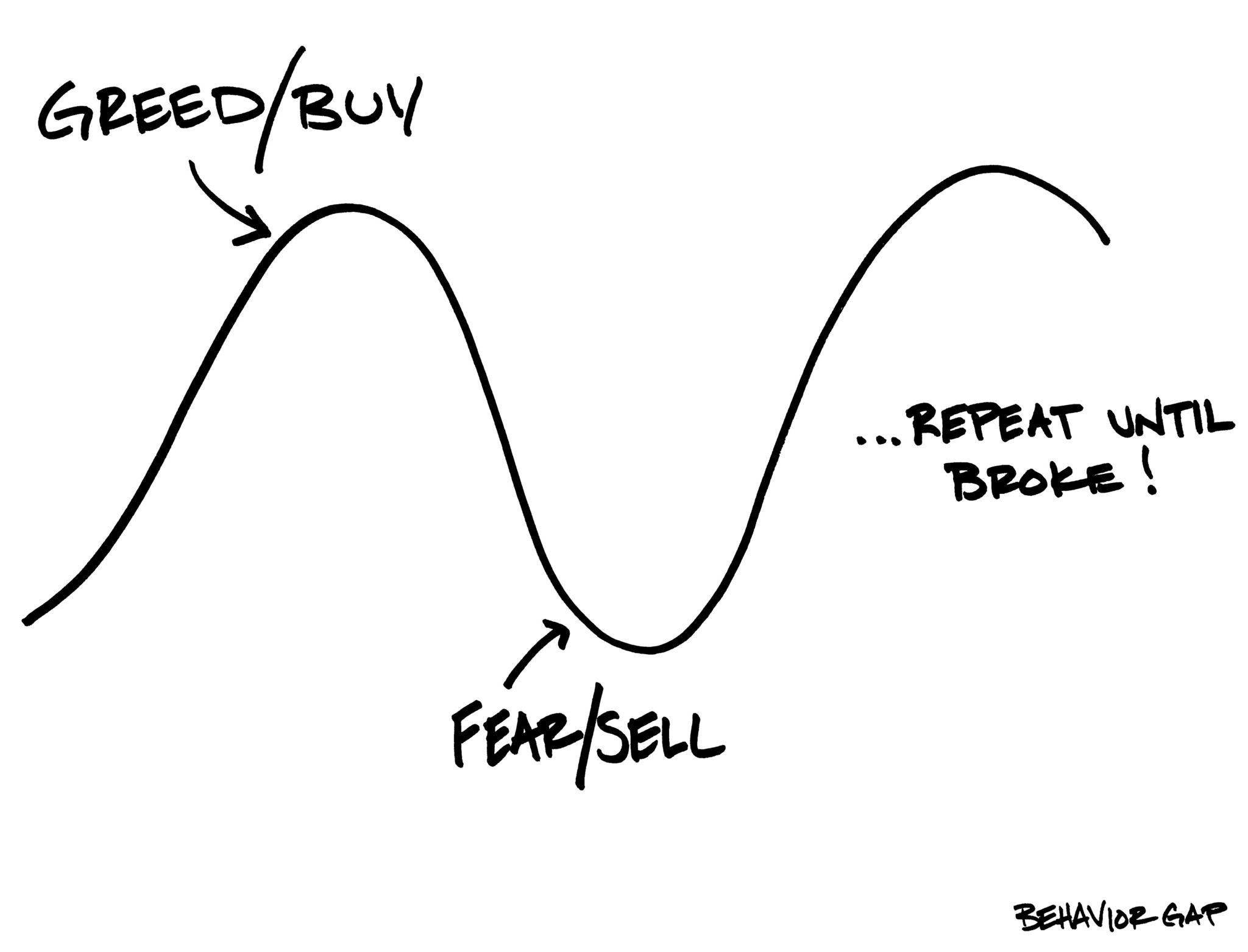
Stock markets opened with a whimper today. It appears that markets are still feeling the pressure of the Middle East conflict. Gold prices continue to fall. I suspect there was a lot of profit-taking going on after the pretty fast run-up in the price. It would seem that gold continues to have a place in long-term portfolios, but no one is talking about gold now. Buy when others are selling, sell when others are buying if you are interested in accumulating a position.

Gold shows you how volatile things can get. It dropped $1,000 an ounce in a pretty short period of time. There are no safe havens anymore, just pain or less pain.

Once again, I am displaying a trading mentality. Looking for the short-term profits. But I must always remind myself that I have maybe 10-15 years left to go. I cannot withstand long-term drawdown periods. So, keeping that in mind would seem to indicate that gold does not fit.

Long-term Canadian stocks worry me, so I look to utilities that have stable revenues and growing dividends.

·

Holding individual stocks has its risks and benefits. A while ago, I bought FedEx shares. They were down in the dumps as they were restructuring the company and going through some changes in their relationship with Amazon. The stock took a nosedive after I bought it, and I added to the position. Since that time, the stock has doubled in a matter of months.

In looking to restructure my portfolio, it was one of the stocks I sold. This morning, the stock’s pre-market is up 6%.

There are a couple of points to note here. First, these things happen. At the same time, I sold my position in Microsoft, which subsequently took an epic dump in share price. You win some, you lose some.

More importantly, what I have gotten into is speculating, not investing. Buying individual stocks can get you there pretty easily. For about a 10-year period, I was disciplined enough not to play this game. But as the market continued to climb, I got into it. It can be exhausting. But more importantly, you end up taking your eye off the ball. You lose sight of your overall investment objectives and start trading your book if you are like me.

Benjamin Graham defined investing as an operation based on thorough analysis, promising safety of principal and an adequate return, while all other operations are speculative. Investors focus on intrinsic business value, whereas speculators bet on price movements driven by market sentiment.

Key Principles from The Intelligent Investor:

Definition: Investment relies on analysis; speculation relies on hope and market timing.

Attitude: The investor acts as a business owner; the speculator acts as a player trying to outguess market fluctuations.

Risk: Speculation becomes dangerous when it is treated as investing. Graham advised limiting speculative, or “mad,” money to a small percentage of a portfolio (e.g., 10%).

The Goal: Investing prioritizes protecting capital, while speculation prioritizes quick gains.

Key Takeaways:

Know the difference: Graham argued that both can be “intelligent” only if one understands which role they are playing.

Avoid “Unintelligent” Speculation: This includes speculating when you think you are investing, treating it as a serious business when lacking skills, and risking more than you can afford.

Market Sentiment: The intelligent investor is a realist who sells to optimists and buys from pessimists.

Good advice in the face of the madness we are seeing now. Every time you click on CNBC or another website, remember this. When you look at your individual stocks and want to trade them, remember this. Be prudent, take profits. Keep your eyes open as to what is going on around you. Develop your investment policy statement and stay focused.

Photo by cottonbro studio on Pexels.com
·

The markets opened weak again today. The excuse or rationale was short-term oil prices. Yet again, the short-term and program traders are in action, tanking the market. It has now become the wild west. For simple investors such as myself, it’s difficult to distance ourselves from the noise. There is so much material on the internet, much of which is disinformation or misinformation. Unfortunately, it seems that everyone is an expert now, as they have a megaphone readily available to them. I just don’t understand how they all manage to support themselves. The most important thing to do in times of market turmoil is to turn it off.

The sad reality is that the action in the Middle East will not come to any decisive conclusion. And we will all have to live with the ambiguity that it creates. There will, in my opinion, be no short-term pain for long-term gain. It will just continue to be like a dull toothache.

As for me, when the dust settles, I will look to take the volatility out of my portfolio. I don’t like these 20% drops in stock prices in a two month period. I don’t know what’s going on in the background, but things seem to be wildly out of control. Time to reflect on my investment objectives and realign myself to face the reeality of my mortality. Hope is not a strategy.

·

Here I am on Thursday morning. Stock markets have continued to plummet over the last couple of days in the face of developments in the Middle East. A friend of mine called, telling me that his wife was in a panic as a result of the steep market decline on Wednesday. I felt the pain as well. I reminded him that the stock market is an elevator, with its ups and downs. I find myself feeling nervous facing the volatility as well. I never learn. A couple of months back, I was going to shift my portfolio from individual stocks to ETFs. I did about half the job and sold mostly the wrong stocks.

Fortunately, I maintained an over-the-top cash reserve, which is a buffer to the market decline. It could have been much worse. When I look at some of the bond ETFs, which are marketed as a tool for stabilizing portfolios, these too have declined, but by a smaller margin.

I am very concerned about the long-term impact of all this on oil prices. It’s funny how, in some twisted way, the environmentalists were right. Pushing towards non-fossil fuels for national security reasons, however, rather than for the environment. It’s funny how things work out.

What’s Next?

I have no idea what will happen. But I do know this. As I get older and my time horizon for investing gets shorter and shorter, I have failed to reduce the volatility embedded in my portfolio. This is another way of saying I should prioritize capital preservation over growth.

The last twenty years of market growth have lulled investors into a false sense of security, leading them to believe that, over time, markets always go up and recover quickly from setbacks. This was not always the case, and it’s not logical to conclude that this will always be the case.

The wet-behind-the-ears crowd wants us to believe that things have changed. That AI and all the other “tools” will boost everything into the stratosphere. But people haven’t changed one bit. Greed and fear are still the primary motivations.

Look at the stock of Elbit Systems. An Israeli military technology company making stuff for war. It trades at a P/E ratio of almost 100. That’s a lot of war. Have investors lost their minds?

Enough said.

·
tired woman sleeping in cozy hammock in flat
Photo by KATRIN BOLOVTSOVA on Pexels.com

The way things are now, there seem to be a lot of compelling reasons to work with an investment advisor. Increasing complexity, market volatility, and geopolitical uncertainty. All the issues might encourage you to seek professional advice. But before you jump into paying a whole bunch of fees and outsourcing control of your money, consider what my experience was.

My experience in talking with investment advisors has been a challenging one. Notwithstanding some of them having many years of “experience”, I have found their knowledge to be, at best, superficial. Many investment advisors are simply pushing internal products for their institution to increase assets under management and the profitability of the firm. In my opinion, they are first and foremost salesmen and secondarily investment advisors. They use “canned” presentations to sell products and have very shallow knowledge of tax, accounting and the fundamental concepts of finance.

I’m not sure where the real work gets done, but it’s not at the investment advisor level. In many instances, if you do your own “due diligence,” you will likely know more than they do. It’s a great disservice to investors and clients that this is how the industry has developed, but it generates billions for the firms that are involved in investment and advisory fees. And as a result, a lot of “fat cats” are harvesting billions for their firms.

So, What Should You Do?

Investment advisors have a role to play, but you need to take a lot of time and effort to find the right one for you. That means that you will likely need to interview a lot of IAs to get a feel of their level of knowledge and professional expertise. Remember that you are interviewing them for a job. You are hiring them; they are not hiring you. Don’t be bullied by them when they try to convince you that they are experts who can best help you. You are paying them, and you are the boss. Don’t forget it! Having said that, the good ones are out there. And it’s like most things, you’ll get out what you put in when looking for an advisor.

This is the one area where I have been totally underwhelmed by many of the people I have talked with, except in two cases. They have been a delight to meet with, but I don’t need two advisors!

Most of them have not asked me what I need, what I want, what my goals are and how to achieve them. I have to fit into their “mould”. I am paying them, and they tell me when I discuss my needs that “that’s not what we do here.” What does that mean? I am paying you, you do as you’re told!

Stay away from these “fake” professionals who are only concerned with how much income they generate, not about how much money you make. But with time and effort, I do not doubt that you will find someone to work with. Don’t give up and stick to getting what you want.

·

Markets continue to be all over the place. I’m not sure whether it’s all the geopolitical stuff going on out there that is messing it up. I had another look at some of my stocks, which are trading well below their twelve-month highs. I am shocked that the Dow and the Nasdaq keep hitting new highs while my portfolio continues to decline in value. What the heck is going on? You can talk about market leadership, but will it ever rotate back to traditional industries? I can’t see that happening in the near future. So does that mean the whole concept of a diversified portfolio of individual stocks is down the tubes? I don’t know the answer.

I don’t know about you, but this is very troubling, particularly for those who run their own investment portfolios and trade individual stocks. But the “old” names don’t seem to work anymore. But for how long?

·

Markets were quiet today, awaiting this, that or the other. It seems like markets are always waiting for something. I’m waiting for my stocks to go up, but a watched pot never boils goes the saying.

Stock markets continue to be dominated by AI. AI here and everywhere.

I find that a lot of the talking heads spew out totally useless and misleading investment advice. There is no accountability or back-checking of what guys like Cramer say. Here is the AI answer about Cramer and General Mills:

Yes, financial personality Jim Cramer has a history of recommending General Mills. However, his stance has evolved, shifting from a long-term “Steady Eddie” buy to a more cautious “hold,” depending on market conditions and company performance (TheStreet, CNBC).

Historical Recommendations:” Steady Eddie” Buy (2013, 2015): Early on, Cramer was impressed with the company’s management and viewed General Mills (GIS) as a stable, long-term investment suitable for income and growth portfolios, even for buying for children’s portfolios. He also called it a buy opportunity during a product recall, viewing it as a temporary issue.

Appetizing for Investors (2015): He recommended the stock based on its shift toward more natural and organic ingredients, tying it to a food revolution.

Too Cheap to Ignore (2019): In 2019, Cramer recommended the stock again, feeling it was undervalued and leading a rebound in the packaged food sector.

Shifting Stance and Current Caution

Over time, Cramer’s view has become more nuanced, reflecting challenges in the consumer packaged goods industry:
Valuation Concerns (2016): While he acknowledged the stock’s strong performance, he noted that analysts and hedge fund managers questioned its valuation and lack of organic growth.

Performance Issues (2025): More recently, he has expressed concerns about the company’s performance, citing weak numbers and a slowdown in the snacking category as an “existential” issue for the whole group.

“Hold” or Cautious Outlook (2023-Present): His current stance is generally more cautious. He has moved General Mills from a “buy” to a “hold” and expressed significant concerns, especially regarding inflation and potential margin sacrifices. He has even said, “I’ve gone from here to here, meaning, no, not much stance changed at all,” and noted the stock can be a “major laggard” in the consumer goods space.”

With a guy like this, who knows what the heck to invest in? Cramer invests in stocks, not enduring businesses with a lot of goodwill (an intangible asset).

You need to develop the mindset that you are investing in a business. Kellogg’s and General Mills were both in the business of selling repackaged sugar. How long could that last? Maybe you can say the same thing about KO, but over the years, they have broadened their product lines to healthier alternatives. But what do I know?

·

Looking at some of my investments, one issue came up. I noticed that stocks like Mastercard, Microsoft and others are all between 15 and 20 per cent off their highs for the last twelve months, as the S&P 500 and the Dow attain new all-time highs. I’m not sure what’s going on, but it seems some large-cap stocks are driving the market while others are left behind. Probably the usual suspects, like Alphabet and Nvidia, to name a couple.

This is disturbing when investing new money in the market. Obviously, the market has rotated out of the past leadership, not that this is news to anyone but me. But if you are looking to invest, it may be flashing some danger signals in this divergence between the “old” stocks and the “new stocks.”

I’m not advocating that anyone try to time the market. I have, however, been looking at swapping out my individual stocks for ETFs. And it makes me nervous, given my age and where I am in overall market strategy.

Bears make money, bulls make money, but pigs get slaughtered is the old saying. But right now it’s a bit tricky for me to make a decision on what to buy and what to avoid. It’s the same old story; most of us, I believe, are “pigs” when it comes to stock markets. I feel like I’ve been slaughtered a few times!

·

With the continuing enthusiasm for AI, I am reminded of a policy that a bank I used to work with had regarding new projects. We used to call them “build it, and they will come.” The bank would never finance these projects without substantial guarantees. The forecasts were always overly optimistic. We have that now. No doubt. The question is ultimately one of whether or not they will come. If they don’t come, this entire structure will tank big time.

white and black no smoking sign
Photo by Eva Bronzini on Pexels.com
·

I’m listening to a podcast called the Loonie Hour. The current episode discusses Venezuela and the rationale for US activities there. It’s interesting. But at the end of the podcast, they rant about the future of Canada and the role it can play. None of these guys plays the long game. It’s all about the short-term impacts of events on the markets. The reason I am mentioning this is how it relates to personal financial planning.

You would think that Canada is now poised to become a great power because of its vast natural resources. They talk about Venezuela and the billions and the years that it would take to rebuild their oil industry. But they gloss over the fact that the same rationale applies to Canada. Yes, Canada has abundant natural resources. No, Canada does not have the billions needed to develop them. The capital market isn’t big enough, and I don’t believe that the risk appetite is here for these kinds of ventures. Never mind the politics.

These guys seem to be thoughtful. But they are short-term focused and are too young to understand that, in the end, the long game is the important one. Sigh!

·

Semiconductor stocks continue to rally. There seems to be no top to it. I’m thinking of switching from individual stocks to ETFs. It’s become too hard to look for individual stocks in the current environment, and I’ve missed the boat on most stuff that blossomed over the last few years.

I owned Taiwan Semiconductor in 2023. I was talking with a Tech Analyst who said that it faced a lot of headwinds in the summer of 2023. Told me it was a sale at $100.

I sold it after listening to this clown. Sometimes, the more people know, the less they know. There was a chip shortage at the time, but this dimwhit hadn’t a clue.

I have found that it’s not always the case that low p/e stocks are value traps. I sold too early on a lot of stocks like Celestica, HSBC, IBM, just to name a few. I won on Caterpillar, but not enough to compensate. It requires a lot of digging, but now I’m coming up with nothing.

I picked up a Japanese financial stock, MUFG. The P/E ratio has doubled since I purchased it. There is no fun in that. Just more risk and no upside, in my opinion, for a long time.

The moral of this story? There are times when there just are no good stocks to buy. Sometimes, with fresh cash, just wait if you can. No one ever lost money holding cash. Don’t listen to the blah, blah, blah about opportunity cost.

·

Sometimes it’s hard to give up old habits. I’ve tried my hand at stockpicking for a long time. What I did not learn is that you should sell when others are buying and buy when others are selling. In April 2025, I should have been loading up. Instead, I was selling. The corollary of that is now I should be lightening up, but for many reasons, I can’t be out of the market. So as I mentioned before, looking at ETFs. For the most part, the ones I’m looking at did a lot better over the last few years than I did.

I didn’t trust my instincts. Sold too early into falling markets. Didn’t learn a darn thing in 50 years.

·

Looking around at common stocks using the old p/e ratio as the valuation metric, things look pretty scary. Most of the growth of large-cap companies has been fueled by an increase in p/e ratios. I have been watching CAT (Caterpillar), the stock for which has doubled in the last twelve months or so. The p/e ratio has more than doubled. This represents the anticipation of growth, not necessarily the actual growth that is taking place.

Much of this is driven by the never-ending thirst for AI and AI-related stocks. It’s hard not to get sucked in to the search for gold and lose sight of my investment objectives, which I have never articulated.

It is very worrisome. I had some great stocks that I disposed of, which had high p/e ratios that were rewarded with even higher p/e ratios. But another problem that comes up for consideration is portfolio rebalancing. If you bought Google after the IPO, you would have had an overconcentration problem in fairly short order. Rebalancing would have taken away the enormous profits that would have been made by hanging on to the stock.

I have no answer to this risk mitigation strategy. But eliminating risk would have eliminated making huge profits since that time. I don’t know. Heads you lose, tails I win. If you figure out the answer, please let me know. But being retired makes the risk-taking even more complicated.

·

I’m back at looking at the stock markets and individual stocks. I cannot escape finding companies that have P/E ratios in the 30s, which are relatively slow-growth and arguably have limited prospects. In many cases, these stocks are promoted by billionaire investors who are attempting to inflate their stock prices. This used to be illegal, but now it’s an everyday occurrence.

Valero (VLO): Michael Burry, of “Big Short” fame, revealed this week that he’s owned Valero since 2020. He argues that Gulf Coast refineries are “purpose-built for Venezuelan heavy crude” and would eventually “produce better margins across jet fuel, asphalt, and diesel.”

Valero operates 15 refineries that can process 3.2 million barrels per day of the heavy, sour crude Venezuela produces.”

I guess his ownership of Valero was kept quiet until now. I don’t know about you, but this stinks.