Tag: investing philosophy

·

Another aspect of registered savings plans in Canada (RRSPs, RRIFs and others), is their portability. What I am referring to here is what happens to these plans in the case where you might want to retire in a country other than Canada.

I have been researching the subject, and a couple of things have come up. First, it’s very difficult to get a clear answer on what happens when you emigrate from Canada. It seems that policies differ from bank to bank, perhaps to a great extent or maybe with minor differences.

What is clear is that in some cases, you will lose access to your portfolio online. What that means is that you will need to actually call in to do a foreign exchange transaction or move funds from your registered plans to your bank account.

As I mentioned above, your account may be coded sell only. So that means that your portfolio is frozen in time, and you cannot make any adjustments to your portfolio other than a sale. If you want to replace one stock with another, you cannot do so. You can only liquidate into cash. It makes traditional portfolio management impossible.

I did a search using AI on how one might manage a portfolio in this situation. It came up with this:

ETFs are generally a better choice than individual stocks for a portfolio that can only be liquidated and not replenished with new purchases, primarily due to diversification benefits and lower single-stock risk.

Why ETFs are Generally Better

Instant Diversification: An ETF is a basket of many underlying securities (often dozens or hundreds). This structure immediately diversifies your holdings across different companies and potentially sectors, which significantly reduces the impact of a poor performance from any single company within the fund.
Reduced Single-Stock Risk: Individual stocks carry idiosyncratic risk (risk specific to that single company), such as a product failure, a lawsuit, or poor management that could drastically drop the stock price. In a liquidation-only scenario, you can’t buy more shares to average down your cost basis or rebalance if one stock plummets. An ETF mitigates this risk by spreading it out.

Built-in Risk Management: With no ability to make new purchases or rebalance actively, the inherent diversification of an ETF acts as a protective shield against volatility. Your portfolio is more resilient to market shocks.

Liquidity and Trading: Most major ETFs are highly liquid and can be easily sold on exchanges, just like individual stocks, ensuring you can liquidate when needed.

Why Individual Stocks Are Riskier in This Scenario

Concentration Risk: If your portfolio only holds a few individual stocks, the failure of just one company could permanently impair a significant portion of your capital, with no way to recover that loss through future investments.

No Rebalancing Capability: In a normal portfolio, you would sell overperforming assets and buy underperforming ones to maintain your target allocation. A liquidation-only scenario prevents you from buying, making it impossible to rebalance. An ETF, while not rebalanced by you, is managed by the fund manager to track its underlying index or strategy, providing consistent exposure over time.

Conclusion

For a portfolio that cannot make new purchases, the priority shifts to capital preservation and risk mitigation. The diversification and risk-spreading properties of ETFs make them a superior and safer choice for maintaining value until liquidation.”

Seems like pretty good advice. I’m 74, it might just be good advice in general.

My point is that you need to be very careful before emigrating. You don’t want any surprises that you can’t manage. At the same time, I should add that some of the investment dealers will close your cash accounts, period. So if you have a portfolio of stocks in a non-registered account, you will, in some instances, be forced to liquidate them. It will not generate any additional tax because of the Canadian departure tax on emigration. But it will mean you will need to buy back your portfolio in your new country, and there may be impediments to doing so. This is really messy, and you need to be very careful.

Another matter is making sure you have a Power of Attorney in place so that you can have things done for you when you have left the country. In the absence of this, you may be forced to return to Canada to take care of this kind of stuff.

The same applies to your bank accounts. Check and double-check what happens.

One maddening aspect of this is the refusal of any of the banks to put anything in writing. No matter who I spoke to, nothing in writing on this topic. Maddening.

·

I’m listening to a podcast called the Loonie Hour. The current episode discusses Venezuela and the rationale for US activities there. It’s interesting. But at the end of the podcast, they rant about the future of Canada and the role it can play. None of these guys plays the long game. It’s all about the short-term impacts of events on the markets. The reason I am mentioning this is how it relates to personal financial planning.

You would think that Canada is now poised to become a great power because of its vast natural resources. They talk about Venezuela and the billions and the years that it would take to rebuild their oil industry. But they gloss over the fact that the same rationale applies to Canada. Yes, Canada has abundant natural resources. No, Canada does not have the billions needed to develop them. The capital market isn’t big enough, and I don’t believe that the risk appetite is here for these kinds of ventures. Never mind the politics.

These guys seem to be thoughtful. But they are short-term focused and are too young to understand that, in the end, the long game is the important one. Sigh!

·

Looking at some of my investments, one issue came up. I noticed that stocks like Mastercard, Microsoft and others are all between 15 and 20 per cent off their highs for the last twelve months, as the S&P 500 and the Dow attain new all-time highs. I’m not sure what’s going on, but it seems some large-cap stocks are driving the market while others are left behind. Probably the usual suspects, like Alphabet and Nvidia, to name a couple.

This is disturbing when investing new money in the market. Obviously, the market has rotated out of the past leadership, not that this is news to anyone but me. But if you are looking to invest, it may be flashing some danger signals in this divergence between the “old” stocks and the “new stocks.”

I’m not advocating that anyone try to time the market. I have, however, been looking at swapping out my individual stocks for ETFs. And it makes me nervous, given my age and where I am in overall market strategy.

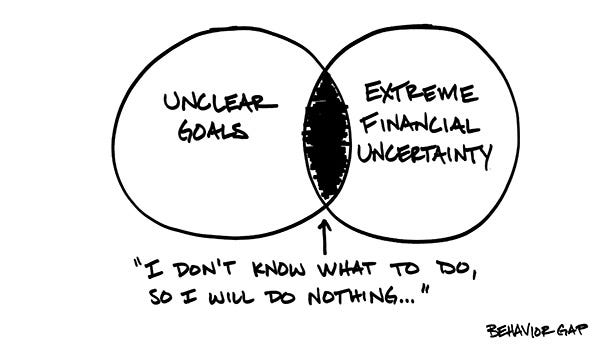
Bears make money, bulls make money, but pigs get slaughtered is the old saying. But right now it’s a bit tricky for me to make a decision on what to buy and what to avoid. It’s the same old story; most of us, I believe, are “pigs” when it comes to stock markets. I feel like I’ve been slaughtered a few times!